
The ABEL model: A Structured Approach to Organizational Efficiency
ABEL is a proven, flexible framework designed to assess organizational readiness, make informed decisions through organizational data, and leverage proven methodologies to enhance your transformation efforts.
Unlike one-size-fits-all approaches, ABEL integrates best practices from Kotter, Prosci, CAP, Lean, Six Sigma, Agile, and more—applying the right methodology at the right time.
- • Assess organizational readiness and identify transformation gaps
- • Make decisions informed by real organizational data
- • Execute with proven methodologies and rhythms
- • Capture outcomes and continuously improve
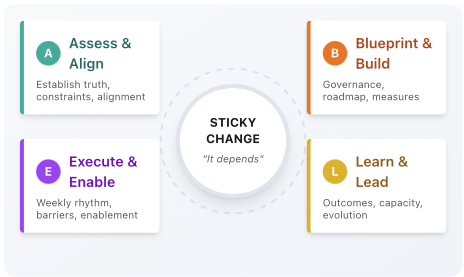
What Is ABEL?
Rather than forcing your organization into a rigid framework, ABEL adapts. It's structured enough to provide clarity and accountability, yet flexible enough to integrate best practices from multiple transformation methodologies.
Core Principles
- • Assessment-Driven: Understand your organizational readiness before designing the transformation
- • Data-Informed Decisions: Make decisions based on real organizational data, not assumptions
- • Proven Methodologies: Leverage best practices from leading frameworks and adapt them to your context
- • Continuous Improvement: Capture outcomes and adjust your approach based on what you learn
When ABEL is Right for You
- • You're planning a significant organizational transformation or change initiative
- • You need to assess organizational readiness before moving forward
- • You want a structured approach that adapts to your specific context
- • You're looking to measure outcomes and continuously optimize
Running an ABEL Cycle
An ABEL cycle typically runs for 6-8 weeks, depending on your transformation scope and pace. Each cycle follows a disciplined rhythm focused on execution and measurement.
1
Establish Governance
Create weekly rhythms, decision forums, and escalation paths
2
Execute with Discipline
Follow weekly rhythms, hold regular check-ins, and maintain focus on priorities
3
Capture Outcomes
Measure progress against key metrics and document lessons learned
4
Continuous Improvement
Adapt your approach based on outcomes and prepare for the next cycle
Weekly Rhythms
- • Monday: Review metrics, assess progress, plan for the week
- • Mid-Week: Decision forums, escalations, barrier removal
- • Friday: Status updates, outcome capture, lessons learned
Key Metrics to Track
- • Adoption rates by team or function
- • Decision velocity and cycle time
- • Stakeholder engagement and satisfaction
- • Key process improvements and efficiency gains
- • Risk identification and mitigation effectiveness
Navigating the Messy Middle
Most transformations hit a point where initial enthusiasm wanes and resistance intensifies. We call this the Messy Middle—and ABEL has a framework to help you navigate it.
Common Challenges in the Messy Middle
- • Competing Priorities — Business-as-usual operations pull resources away from transformation initiatives
- • Resistance and Fatigue — People get tired; old habits re-emerge; skeptics become louder
- • Unclear Progress — Progress isn't always visible; early wins can blur into larger challenges
How ABEL Helps
- • Clear Decision Frameworks: Help teams understand how to prioritize when everything feels urgent
- • Visible Metrics: Show progress that's easy to understand and celebrate
- • Escalation Paths: Quickly surface and resolve obstacles that could derail the effort
- • Regular Reinforcement: Sustain momentum through weekly rhythms and leadership alignment
Ready to Learn More?
Explore our Training Center to access interactive templates, guided resources, and expert insights for implementing ABEL in your organization.
2Him
Complement your organizational efficiency efforts with 2Him—a powerful tool designed to help you assess and enhance your social and environmental impact. Measure what matters, make data-driven decisions, and create lasting positive change in your organization and community.